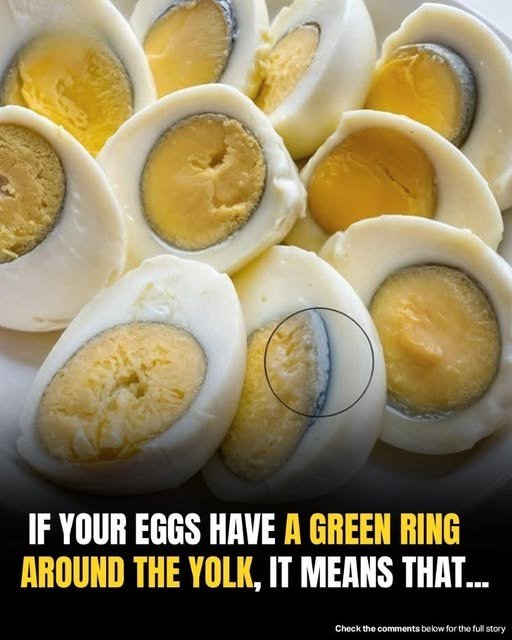
Have you ever boiled an egg, peeled it, and discovered an unusual green or gray ring surrounding the bright yellow yolk? At first glance, it might look strange enough to make you question whether the egg is still safe to eat. But before you throw it away, there is something important to know: a green ring around a hard-boiled egg yolk is usually a sign that the egg has been cooked for too long, not that it has spoiled.
This common kitchen mystery has a simple scientific explanation, and understanding it can help you prepare better-looking eggs every time.
Why Does the Egg Yolk Turn Green?
The greenish-gray ring forms when two naturally occurring substances inside the egg react during cooking: iron in the yolk and sulfur compounds released from the egg white.
When an egg is heated for too long, or at an excessively high temperature, these substances can react near the boundary between the white and the yolk. The reaction produces a compound called iron sulfide, which creates the familiar green or gray discoloration.
The good news? This color change is generally harmless. It is a result of the cooking process rather than evidence of contamination.
Does a Green Ring Mean the Egg Is Unsafe to Eat?
In most cases, no. If the egg was fresh, handled properly, cooked thoroughly, and stored safely, a green ring around the yolk is usually nothing to worry about.
However, appearance alone cannot guarantee that an egg is safe. An egg that has an unusual or unpleasant smell, a slimy texture, or a history of improper storage should be treated with caution. When in doubt, throw it away.
It is also important to remember that eggs can sometimes contain harmful bacteria without showing obvious changes in color, smell, or texture. Proper cooking and safe storage remain essential.
How to Prevent the Green Ring
If you want perfectly cooked eggs with bright yellow yolks, a few simple adjustments can make a difference.
1. Avoid overcooking. Excessive cooking encourages the chemical reaction that creates the green ring. Once the water reaches a boil, reduce the heat and cook the eggs gently.
2. Cool the eggs quickly. When the eggs are finished cooking, transfer them immediately to a bowl of ice water or very cold water. This stops the cooking process and helps prevent the yolks from developing a greenish edge.
3. Use a reliable cooking method. For hard-boiled eggs, bring the water to a boil, remove the pan from the heat, cover it, and let the eggs stand for around 10–12 minutes, depending on their size and how firm you want the yolks. Then cool them promptly. You can also use a gentle simmering method, adjusting the time to suit your preferred texture.
4. Store cooked eggs properly. Refrigerate hard-boiled eggs within two hours of cooking, or within one hour if the temperature is above 32°C (90°F). Refrigerated hard-boiled eggs should generally be eaten within one week.
Are Green-Ringed Eggs Less Nutritious?
The green ring does not mean the egg has suddenly lost all its nutritional value. Eggs still provide high-quality protein, vitamin B12, selenium, and other important nutrients.
Nevertheless, cooking eggs for excessively long periods can affect some heat-sensitive nutrients to varying degrees. Avoiding overcooking is therefore useful for both appearance and cooking quality.
Can You Still Use the Egg in Your Favorite Recipes?
Absolutely, provided the egg has been handled, cooked, and stored safely. A green ring may make a sliced hard-boiled egg look less attractive, but it usually does not significantly affect its taste.
You can still chop it into egg salad, mash it for a sandwich filling, add it to a salad, or enjoy it as part of breakfast. The yolk may have a slightly different texture if the egg is overcooked, but the discoloration itself is generally harmless.
The Simple Lesson Behind the Green Ring
A green ring around a hard-boiled egg yolk may look alarming, but it is usually just a little kitchen chemistry at work. It forms when iron and sulfur compounds react during prolonged heating.
The next time you see that gray-green circle, you do not automatically need to panic or throw the egg away. Instead, consider how it was cooked and stored, check for other warning signs, and remember that proper handling matters more than color alone.
The secret to beautiful hard-boiled eggs is simple: cook them gently, cool them quickly, and store them safely. A small change in your routine can help you enjoy eggs with tender whites and bright, golden yolks—without that mysterious green ring.
For Complete Cooking STEPS Please Head On Over To Next Page Or Open button