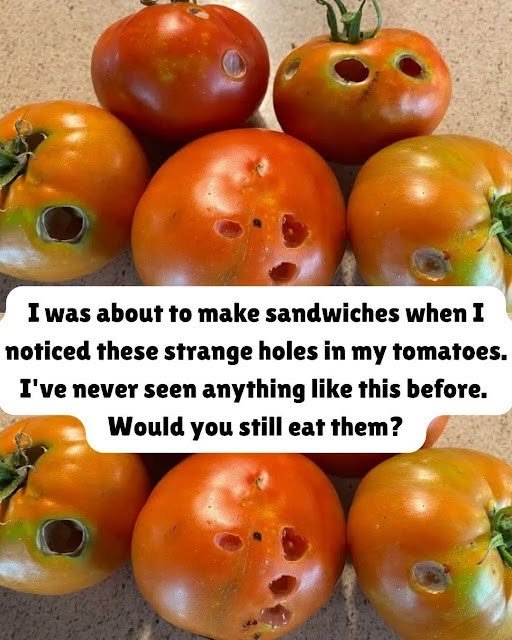
What Causes Holes in Tomatoes? (And Are They Safe to Eat?)
Tomatoes are undeniably among the most versatile and beloved ingredients in kitchens around the world. Whether sliced onto sandwiches, tossed into fresh salads, simmered into rich sauces, or eaten straight off the vine, they are prized for their juicy texture, vibrant color, and refreshing flavor.
But imagine stepping into your garden, picking a gorgeous, ripe red tomato, and noticing something unusual: it has tiny holes in its skin.
Some look like pinprick punctures, while others resemble deep tunnels or ragged openings.
Naturally, a few questions immediately come to mind: Is it still safe to eat? Are there insects hiding inside? Is it rotting from the inside out? Or is there a harmless explanation?
Holes in tomatoes stem from several distinct causes, and their shape, depth, and location offer crucial clues. Learning to read these signs helps you protect your garden, reduce food waste, and make safe, informed choices in the kitchen.
1. Why Do Tomatoes Develop Holes?
Tomatoes have delicate skin, making them vulnerable to insects, hungry wildlife, harsh weather, and physical friction.
-
In the Garden: Some damage happens while the fruit is actively growing on the vine.
-
Post-Harvest: Other blemishes occur after picking, especially during transport or improper storage.
The appearance of the opening tells the story. A tiny, neat puncture usually points to a sap-sucking insect, whereas a large, jagged cavity suggests feeding by a caterpillar, slug, or bird.
While a surface blemish isn’t always a dealbreaker, any break in the skin allows bacteria and fungi to enter the fruit. That is why careful inspection is essential.
2. Tomato Fruitworms: The Underground Tunnelers
One of the primary culprits behind deep holes in garden tomatoes is the tomato fruitworm (the larva of the Helicoverpa zea moth).
These caterpillars bore directly into green or ripening fruit to feed on the internal flesh. They often leave a visible entrance hole near the stem, frequently surrounded by dark, sawdust-like droppings (frass) or decaying tissue. In many cases, the caterpillar remains hidden inside the tomato long after it starts feeding.
Signs of Fruitworm Damage:
-
Neat, medium-sized holes near the stem or top of the tomato.
-
Dark droppings or soft, dark tissue near the opening.
-
Internal decay or premature fruit drop.
3. Tomato Hornworms: Massive Pests with Huge Appetites
Tomato hornworms are large, bright-green caterpillars famous for stripping tomato plants bare. While their primary food source is foliage and tender stems, they won’t hesitate to take large bites out of developing fruit when hungry.
Because their green camouflage blends seamlessly with tomato leaves, hornworms often go unnoticed until significant damage is already done. Look for missing leaves, bare stems, dark droppings on lower leaves, and large, shallow gouges in the fruit.
4. Slugs and Snails: Nighttime Nibblers
If your tomatoes exhibit shallow, irregular holes—particularly on fruit hanging close to the ground—slugs or snails are likely responsible.
These pests thrive in damp environments and feed under the cover of darkness. Unlike the neat punctures of caterpillars, slug damage appears as uneven, chewed patches on the lower half of the tomato. You will often spot telltale silvery, shiny slime trails on nearby soil or leaves.
Quick Prevention Tips:
-
Stake or cage plants to lift fruit off the soil.
-
Water early in the morning so the soil surface dries before nightfall.
-
Clear away fallen leaves and rotting fruit where slugs like to hide.
5. Stink Bugs and Piercing Insects: Tiny Pinpricks
Not all pests chew large holes. Insects like stink bugs, leaf-footed bugs, and aphids use needle-like mouthparts to pierce the tomato skin and suck out the juices beneath.
This feeding style leaves tiny, dark pinpoint punctures surrounded by pale, yellowish, or cloudy white patches of hardened flesh beneath the skin. While these tiny marks rarely cause the entire tomato to rot immediately, they degrade the texture and visual quality of the fruit.
6. Birds Seeking Moisture
During hot, dry summer stretches, birds will peck at ripe tomatoes—not necessarily for food, but for hydration.
Bird damage usually manifests as distinct, V-shaped peck marks or larger open gouges on exposed, high-hanging fruit. If multiple top-facing tomatoes suddenly display open wounds during a heatwave, local birds are almost certainly the cause.
Garden Tip: Install bird netting securely over plants, or place a birdbath nearby to provide a cleaner water source for local wildlife.
7. Growth Cracks and Splits: Weather-Related Openings
Sometimes, what looks like an insect hole is actually a physical split caused by rapid weather changes.
When a tomato plant receives a sudden surge of water after a dry spell (such as heavy rainfall after a drought), the inside of the fruit expands faster than the skin can stretch. This causes the skin to burst, producing two common types of splits:
-
Radial Cracks: Lines radiating outward from the stem attachment point.
-
Concentric Cracks: Circular splits running around the top shoulders of the fruit.
Are Split Tomatoes Safe?
A freshly split tomato is perfectly safe to eat if the flesh remains firm, clean, and free of mold or sour odors. However, open cracks invite fruit flies, dirt, and mold spores. Consume freshly split tomatoes immediately, or discard them if decay has set in.
8. Blossom-End Rot: A Nutritional & Moisture Imbalance
Blossom-end rot is often mistaken for pest or rot damage. It appears as a dark, sunken, leathery patch directly on the bottom (blossom end) of the tomato.
This disorder is not caused by insects, fungi, or bacteria. It is a physiological condition caused by a localized calcium deficiency in the developing fruit, almost always triggered by inconsistent watering habits. When soil moisture fluctuates wildly, the plant cannot transport calcium efficiently to the growing tips.
Maintaining a steady watering schedule and mulching soil beds is the most effective way to prevent blossom-end rot.
9. Secondary Rot: When Minor Holes Become Major Problems
Whenever a tomato’s protective skin is compromised, airborne bacteria and fungal spores enter freely.
What starts as a tiny insect puncture can quickly turn into a soft, watery mess. If a hole is accompanied by leaking fluid, dark or black margins, fuzzy mold growth, or a sour, fermenting odor, the fruit is experiencing secondary decay and should be discarded immediately.
10. Is It Safe to Eat a Tomato With Holes?
| Scenario | Safety Assessment | Recommended Action |
| Tiny, superficial surface scratch or bird peck | Low Risk | Wash thoroughly under running water, slice off the damaged area, and eat the rest. |
| Fresh growth crack (firm flesh, no odor) | Low Risk | Trim the split area away and consume immediately. |
| Deep tunnel, caterpillar frass, or internal decay | High Risk / Unsafe | Discard. Bacteria and insects spread deeply into soft, moist tissue. |
| Presence of white, gray, or black mold | Unsafe | Discard. Fungal toxins penetrate far beyond the visible mold spot. |
11. How to Inspect Homegrown Tomatoes
Unlike store-bought produce, garden tomatoes haven’t passed through commercial washing or grading lines. Get into the habit of inspecting every harvest:
-
Check the shoulders and stem base for hidden fruitworm entry holes.
-
Inspect the bottom for blossom-end rot or slug damage.
-
Gently squeeze the fruit: If a hole oozes fluid or feels soft and hollow beneath the surface, discard it.
-
Remove damaged tomatoes promptly from the vine so they don’t attract additional pests to healthy crops.
12. Natural Ways to Prevent Hole Damage in Your Garden
-
Inspect Plants Regularly: Walk your garden every few days, looking under leaves and near fruit clusters.
-
Hand-Pick Pests: Manually remove large caterpillars (like hornworms) and drop them into soapy water.
-
Elevate Your Plants: Use cages, stakes, or trellises to keep heavy branches and ripening fruit high above the soil.
-
Mulch Soil: A 2-to-3-inch layer of organic mulch helps regulate soil moisture and prevents growth cracking.
-
Clear Fallen Fruit: Remove overripe or decaying tomatoes from the ground immediately to discourage beetles and slugs.
13. Should You Use Pesticides?
Chemical sprays are rarely the first or best answer for garden tomato pests. An Integrated Pest Management (IPM) strategy is safer and more effective:
-
Biological Controls: For severe caterpillar infestations, organic options containing Bacillus thuringiensis (Bt)—a natural soil bacterium—target caterpillars without harming beneficial pollinators or birds.
-
Physical Barriers: Insect mesh, fruit protection bags, and bird netting offer chemical-free protection.
Always identify the exact pest before applying any treatment, and follow product label instructions carefully.
14. Proper Storage to Prevent Post-Harvest Rot
-
Whole, Uncut Tomatoes: Store at room temperature away from direct sunlight. Refrigerating whole, unripe tomatoes degrades their texture and dulls flavor compounds.
-
Cut or Damaged Tomatoes: Place in an airtight container and refrigerate immediately. Use within 2 days.
-
Washing: Always wash tomatoes under cool, running water right before preparing them. Avoid using soaps or chemical detergents on fresh produce.
15. Store-Bought Tomatoes with Blemishes
Even grocery store tomatoes occasionally show small marks or punctures from handling, shipping, or display pins. Before buying:
-
Select tomatoes that feel firm and heavy for their size.
-
Avoid fruits with weeping skin, soft spots, or dark punctures near the stem.
-
If one tomato in a clamshell package spoils, remove it immediately to prevent mold from spreading to neighboring fruit.
16. Debunking Common Tomato Myths
Myth 1: “Every hole in a tomato contains a live worm.”
Fact: False. Holes can be caused by birds, growth splits, hail, or insects that fed briefly and moved on.
Myth 2: “Holes mean the tomato is genetically modified (GMO).”
Fact: False. Physical damage has zero connection to genetic modification. Commercial garden tomatoes are not modified to produce physical holes.
Myth 3: “You can safely cut around any moldy spot on a tomato.”
Fact: False. Tomatoes are soft and water-dense, allowing invisible microscopic mold threads and bacteria to spread far beyond the visible spot.
Conclusion: Reading the Clues in Your Garden
Finding a hole in a tomato doesn’t mean your gardening season is a failure. Instead, it serves as a helpful piece of feedback from mother nature.
Cracking points to watering habits, chewed leaves point to caterpillars, and slime trails point to slugs. By recognizing these signs early, you can adjust your garden routine, protect your remaining harvest, and enjoy safe, delicious produce all summer long.
When in doubt in the kitchen, remember the golden food safety rule: if a hole goes deep into the fruit or shows any sign of rot or mold, toss it out.
For Complete Cooking STEPS Please Head On Over To Next Page Or Open button