The Biker Wave Explained: The Meaning Behind the Two-Finger Motorcycle Greeting
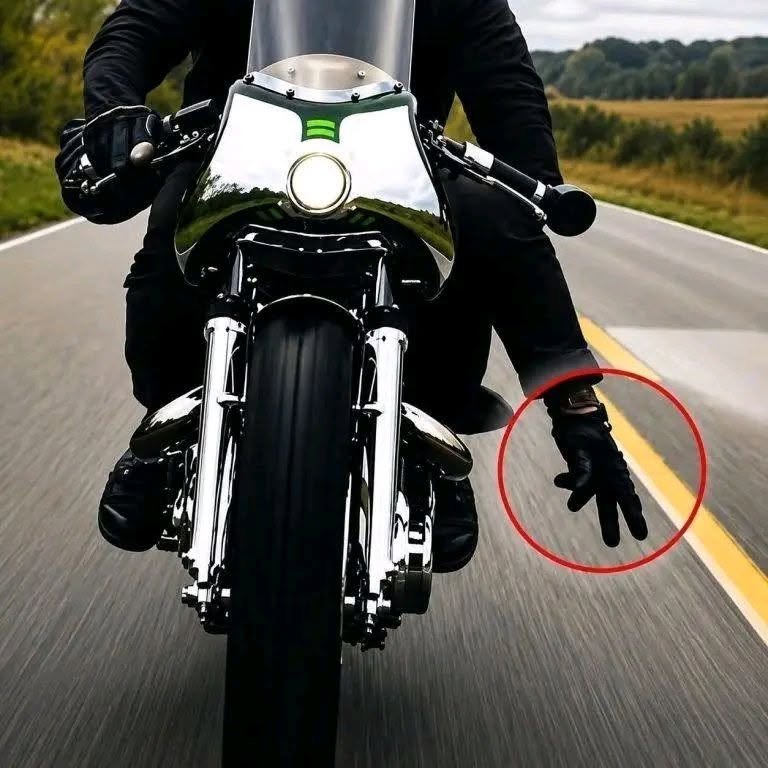
Have you ever been driving down the road and noticed a motorcyclist passing another rider while extending two fingers down toward the pavement?
At first glance, the gesture might seem mysterious. Is it a secret code? A warning about danger ahead? Or simply a casual way of saying hello?
For those outside the riding community, the movement can be puzzling. But for experienced riders, this subtle gesture carries a deep, time-honored meaning.
The low two-finger wave is a symbol of friendship, mutual respect, and solidarity between riders. It is most commonly associated with the unspoken message: “Keep two wheels on the ground”—a warm wish for the other rider to stay safe.
Although the gesture takes only a fraction of a second, it represents a shared tradition that connects motorcyclists across different backgrounds, ages, and motorcycle brands.
1. What Exactly Is the Two-Finger Motorcycle Greeting?
Commonly known as the biker wave or motorcycle wave, this greeting typically involves a rider extending their left hand downward at a 45-degree angle, pointing two fingers toward the road as another rider approaches from the opposite direction.
The gesture is usually performed using the index and middle fingers, keeping the hand relaxed and low. Unlike a traditional wave, riders rarely raise their hand above the handlebar or shoulder. Keeping the movement subtle and low makes it distinctive and easily recognizable at highway speeds.
Of course, not every rider uses the exact same gesture. Some prefer an open-hand wave, while others offer a simple head nod or lift a few fingers off the handlebar. Regardless of the variation, the core message remains the same: mutual respect and acknowledgment.
2. What Do the Two Fingers Pointing Down Mean?
The most widely accepted meaning relates directly to the physics of riding a motorcycle.
The gesture is universally interpreted as a wish for safe travels:
“Keep both wheels on the ground and ride safe.”
The two extended fingers symbolize the motorcycle’s two wheels, while pointing them toward the road represents keeping those wheels firmly planted on the asphalt.
While some riders simply view it as a casual habit passed down through generations, for most, it is a conscious expression of shared goodwill and protection on the open road.
3. Why Do Motorcyclists Greet Complete Strangers?
One of the most unique aspects of motorcycle culture is its immediate sense of community. Two riders may be complete strangers, riding entirely different styles of bikes in opposite directions, yet they will almost always exchange a greeting.
Why? Because riding a motorcycle comes with shared experiences that drivers in enclosed cars simply don’t have.
Riders understand:
-
The thrill of the open road and raw freedom.
-
The physical challenges of sudden rain, cold winds, and heat.
-
The constant vigilance required to stay safe around larger vehicles.
This shared reality creates an instant bond. A quick wave acknowledges that connection without needing to say a single word.
4. The Origin and History of the Motorcycle Wave
Pinpointing the exact origin of the biker wave is tricky, as motorcycle history is filled with folklore.
One popular story credits motorcycle pioneers William Harley and Arthur Davidson. Legend has it that when the two founders passed each other on their motorcycles, they waved, establishing a custom that quickly spread among early riders.
While historical proof of that specific moment is limited, riders have used hand signals for over a century. As motorcycle clubs, touring groups, and commuter communities grew throughout the 20th century, these informal acknowledgments solidified into recognizable traditions. Today, the two-finger-down wave is especially iconic across North America.
5. Why Is the Left Hand Always Used?
The reason motorcyclists use their left hand for the wave comes down to motorcycle design and safety:
-
Right Hand: Controls the throttle and the front brake. Removing the right hand from the handlebar causes the bike to lose speed instantly and limits emergency braking.
-
Left Hand: Controls the clutch. When cruising steadily at speed, the clutch isn’t actively being used, freeing up the left hand to extend a quick greeting.
However, safety always trumps tradition. A rider will never take their left hand off the controls if doing so compromises their balance or control of the bike.
6. Does Every Motorcyclist Wave the Same Way?
Not necessarily. Motorcycle culture is diverse, and greeting styles vary based on geography, bike type, and road conditions:
| Greeting Style | Common Scenario |
| Two Fingers Down | Cruisers, touring bikes, and standard motorcycles on open roads. |
| Low Open Palm | Adventure riders and casual commuters. |
| Bar-Top Finger Lift | Sportbike riders maintaining a tight grip or riders in heavy traffic. |
| The Helmet Nod | Common in countries where riders travel on the left side of the road (UK, Australia), making left-hand waves less visible to oncoming traffic. |
7. Why Some Riders Don’t Wave Back
If you wave at a motorcyclist and they don’t return the gesture, don’t take it personally—it’s rarely out of rudeness.
There are many practical, safety-critical reasons a rider might keep both hands glued to the handlebars:
-
They are actively shifting gears or pulling the clutch.
-
They are entering a sharp curve or turning at an intersection.
-
They are braking or navigating potholed terrain.
-
They are battling strong crosswinds.
-
They simply didn’t see you in time.
In motorcycle riding, safety always comes before social etiquette.
8. The Meaning of Brotherhood and Sisterhood on Two Wheels
Motorcycle culture is rooted in a sense of freedom, adventure, and mutual support. This feeling of “brotherhood” or “sisterhood” isn’t reserved for formal motorcycle clubs—it extends to commuters, weekend enthusiasts, and long-distance tourers alike.
The biker wave is a micro-affirmation of that shared identity. It acknowledges another human being who understands the joys and vulnerabilities of life on two wheels. On long, lonely highway stretches, that brief flash of two fingers can turn a solo ride into a shared journey.
9. Is the Gesture a Secret Biker Code?
Despite its cool, slightly mysterious appearance, the low two-finger wave is not a secret code or a sign of club affiliation.
It also isn’t a hazard warning. While riders do use specific hand signals to warn each other of speed traps, debris, or road hazards (such as tapping the top of their helmet to signal police ahead), the two-finger-down gesture is purely social. Its charm lies in its simplicity—a effortless gesture communicating profound respect.
10. Other Essential Motorcycle Hand Signals
When riding in groups or communicating road conditions, motorcyclists use a standardized vocabulary of hand and foot signals:
-
Tapping Helmet: Warning for police or speed checks ahead.
-
Pointing Foot/Finger at the Road: Alerting behind riders to road hazards like gravel, potholes, or roadkill.
-
Left Arm Extended Straight Out: Indicating a left turn.
-
Left Arm Bent Upward at 90 Degrees: Indicating a right turn.
-
Single File / Staggered Formation: Group riding positioning signals.
11. Why the Greeting Is More Than Just a Wave
In a fast-paced world where strangers rarely acknowledge one another, the motorcycle wave is a rare, meaningful ritual. It creates an instant moment of human connection between people who might otherwise have nothing in common.
It also serves as a subtle reminder of shared vulnerability. Motorcyclists don’t have the protective steel cage, airbags, or seatbelts of a car. Recognizing one another fosters an unspoken culture of mutual watchfulness and respect on the road.
12. Safety Always Comes Before Custom
As cherished as the biker wave is, it should never take priority over safe riding practices.
Riders should always keep both hands on the controls when:
-
Navigating heavy traffic or busy intersections.
-
Riding in rain, fog, or night conditions.
-
Cornering or leaning into tight turns.
When taking a hand off the bar isn’t safe, a quick nod of the helmet communicates the exact same warmth without adding unnecessary risk.
Conclusion: The True Message Behind the Gesture
The next time you see a motorcyclist extend two fingers toward the asphalt, you’ll know the story behind the tradition.
It isn’t an exclusive secret—it is a simple, universal message between riders: Respect, solidarity, and safe travels.
Whether someone is riding a high-powered sportbike, a vintage cruiser, a rugged adventure bike, or a daily commuter scooter, that brief gesture bridges the gap between strangers. In a world full of noise, sometimes two fingers pointed at the road say everything that needs to be said.
For Complete Cooking STEPS Please Head On Over To Next Page Or Open button