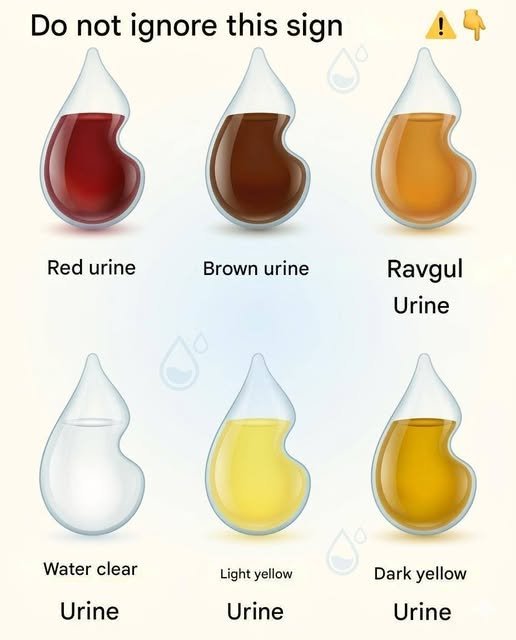
Meta Description: Discover what clear, pale yellow, amber, brown, or red urine signals about your hydration, liver, and kidney health. Learn when to drink water and when to seek medical advice.
Introduction
While most of us don’t spend much time analyzing what we leave behind in the toilet, doing so offers a valuable snapshot of our internal health. The color of your urine serves as a real-time indicator of your hydration levels, kidney efficiency, metabolic balance, and overall wellness.
Whether you are looking at a standard clinical shade chart or simply noticing a sudden shift during your daily routine, distinct colors correspond to precise physiological states.
Here is a comprehensive breakdown of what each shade signifies—and when it is time to consult a medical professional.
1. Completely Clear (Transparent)
-
The Cause: Overhydration.
-
The Mechanism: While proper fluid balance is essential, drinking excessive amounts of water forces your kidneys to flush out fluids before your body can balance critical electrolytes like sodium and potassium.
-
Health Risks: Severe overhydration can precipitate hyponatremia—a condition where blood sodium levels fall to dangerously low levels, triggering headaches, confusion, nausea, and in severe cases, seizures.
-
The Action Step: Ease up on your water intake slightly until your urine shifts back to a light straw color.
2. Light Yellow (Pale Straw)
-
The Cause: Optimal hydration and healthy physiological function.
-
The Mechanism: This is the gold standard. It demonstrates that your kidneys are efficiently filtering metabolic waste while maintaining a healthy fluid balance.
-
The Goal: Aim to keep your hydration steady in this range throughout the day.
3. Dark Yellow
-
The Cause: Mild dehydration.
-
The Mechanism: When your fluid intake drops, your kidneys conserve water. This concentrates urochrome—the natural pigment produced by the breakdown of hemoglobin—making your urine appear deeper in hue.
-
The Action Step: Drink a glass or two of water. Your urine should return to a paler shade within a few hours.
4. Amber or Deep Orange
-
The Cause: Moderate-to-severe dehydration, dietary supplements, or potential liver/bile duct complications.
-
The Mechanism:
-
Fluid Shortage: If your urine resembles apple juice, your body is critically low on fluids.
-
Hepatic Factors: Persistent orange urine despite adequate fluid intake can indicate excess bilirubin buildup—a potential sign of liver disease or a blocked bile duct.
-
Exogenous Factors: High doses of B-complex vitamins or medications like phenazopyridine (commonly prescribed for UTI pain relief) can also impart a bright orange tint.
-
-
The Action Step: Rehydrate immediately. If the orange tone persists despite drinking plenty of fluids, schedule a consultation with your doctor.
5. Dark Brown (Cola-Colored)
-
The Cause: Severe dehydration, hepatic conditions, or muscle tissue breakdown.
-
The Mechanism:
-
Liver Pathology: Brown urine is a classic clinical marker for liver conditions such as hepatitis or cirrhosis.
-
Rhabdomyolysis: Rapid breakdown of damaged skeletal muscle tissue releases toxic protein (myoglobin) into the bloodstream, which can severely stress or damage the kidneys. This often occurs following extreme, unaccustomed physical exertion or physical trauma.
-
-
The Action Step: Seek prompt medical evaluation, particularly if accompanied by jaundice (yellowing of the skin or eyes) or pale stools.
6. Pink or Red
-
The Cause: Presence of blood (hematuria) or dietary pigments.
-
The Mechanism:
-
Medical Causes: Hematuria can stem from urinary tract infections (UTIs), kidney stones, benign prostatic hyperplasia (enlarged prostate), or tumors within the renal or bladder systems.
-
Benign Causes: Consuming foods rich in deep pigments—such as beets, blackberries, or rhubarb—can temporarily turn urine pink or red (a harmless phenomenon known as beeturia).
-
-
The Action Step: Unless you recently ate beet- or berry-heavy meals, contact a healthcare provider promptly for a simple urinalysis.
7. Other Rare Colors & Textures
-
Cloudy or Murky: Frequently signals a urinary tract infection, excess dietary protein, or crystallization of minerals (a precursor to kidney stones).
-
Blue or Green: Extremely rare. Most often linked to specific food dyes, diagnostic agents, or medications (such as amitriptyline or propofol). Occasionally, it stems from a Pseudomonas bacterial infection.
How to Maintain Optimal Urinary Health
-
Hydrate According to Thirst: Listen to your body’s natural signals. Increase your fluid intake during hot weather, intense exercise, or illness.
-
Evaluate Your Afternoon Urine: First-morning urine is naturally concentrated due to overnight fasting. Use your mid-day urine color as your true hydration baseline.
-
Pace Your Diuretics: Excess consumption of caffeinated drinks and alcohol increases fluid excretion, accelerating dehydration and concentrating your urine.
When to See a Doctor
Schedule a medical checkup immediately if you experience:
-
Persistent red, pink, or cola-brown urine unrelated to diet or known medication.
-
Consistently cloudy, opaque, or foul-smelling urine.
-
Pain, burning, or discomfort during urination.
-
Unexplained increases in urinary urgency or frequency.
Disclaimer: This article is for informational and educational purposes only and does not substitute for professional medical advice, diagnosis, or treatment. Always consult a qualified healthcare provider regarding any medical concerns or symptoms.
For Complete Cooking STEPS Please Head On Over To Next Page Or Open button